Scalable Imitation Learning
Learning robust manipulation policies from large-scale demonstrations and representation-rich observations.
I am a second-year Ph.D. student in the Department of Technology Management for Innovation, Graduate School of Engineering, The University of Tokyo. My research focuses on robot learning, with an emphasis on scalable imitation learning and test-time scaling for robot foundation models.
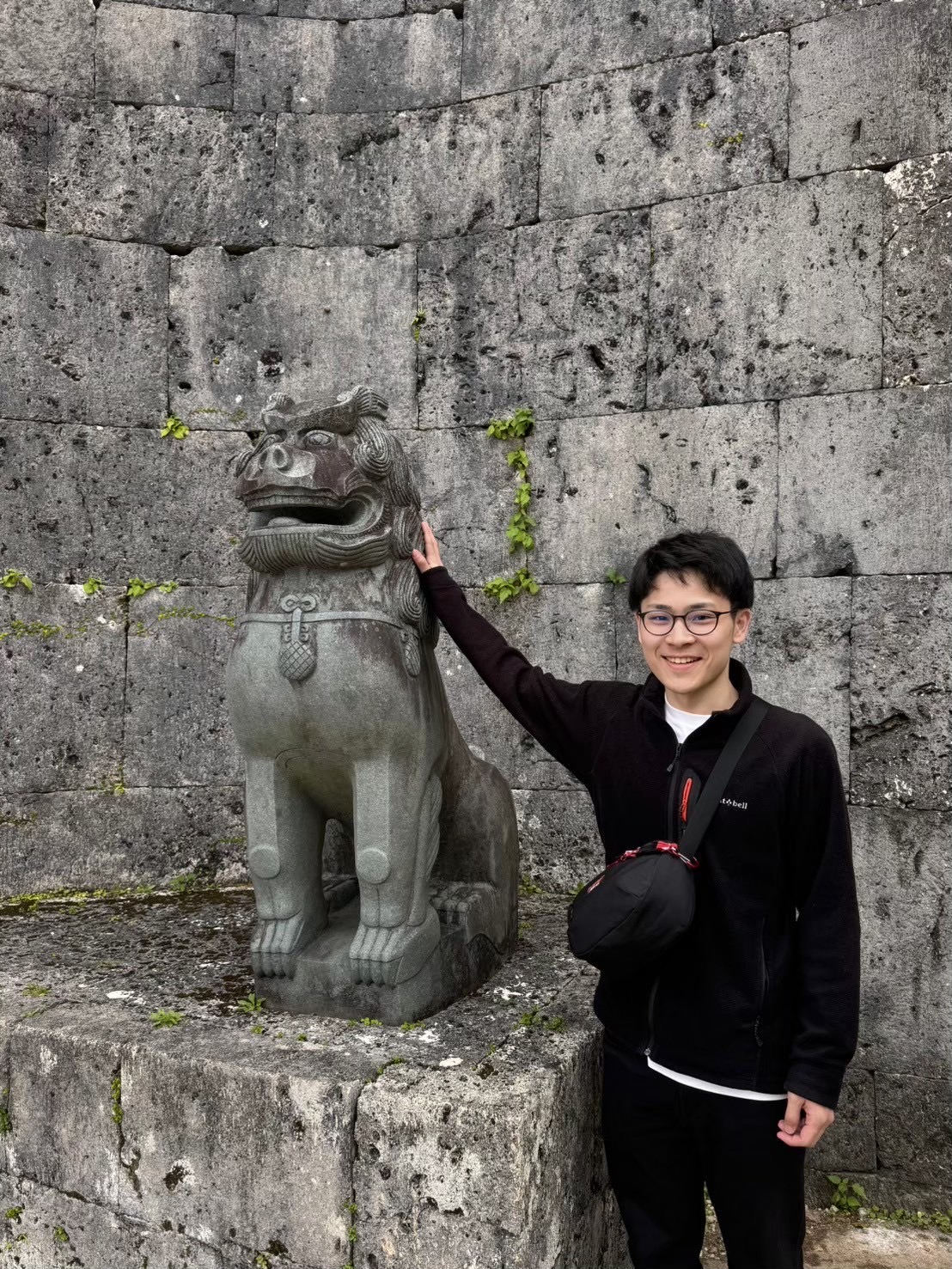
My work sits at the intersection of imitation learning, reinforcement learning, task and motion planning, and robot foundation models. I am especially interested in how large-scale data, simulation, and inference-time computation can improve long-horizon reasoning and contact-rich manipulation.
At the University of Tokyo, I study scalable imitation learning and test-time scaling for robot foundation models. Before starting my Ph.D., I worked on task and motion planning for contact-rich manipulation at Nara Institute of Science and Technology, and on multimodal object identification at Saitama University.
My research experience spans academia, industry, and applied AI settings, including Sakana AI, AIRoA, Matsuo Institute, and AIST. Across these environments, I have focused on embodied intelligence, simulation-driven learning, and scalable training pipelines for robotics.
I am interested in building robot learning systems that scale with richer demonstrations, stronger simulation, and more effective inference-time decision making.
Learning robust manipulation policies from large-scale demonstrations and representation-rich observations.
Studying how additional compute at inference time can improve in-context decision making for embodied agents.
Combining task and motion planning with learning-based policies for precise and contact-rich manipulation tasks.
Using generative simulation, world models, and embodied datasets to train more general robot policies.
My background combines mechanical engineering, information science, and technology management, with a consistent focus on robot learning.
Ph.D. Student, Department of Technology Management for Innovation, Graduate School of Engineering
Research: Scalable Imitation Learning and Test-Time Scaling for Robot Foundation Models
M.Eng., Graduate School of Advanced Science and Technology, Information Science
Research: Task and Motion Planning for Contact-Rich Manipulation
B.Eng., Faculty of Engineering, Department of Mechanical Engineering and System Design
Research: Object Identification Using Visual and Surface-Tracing Vibration Signals
My experience includes research collaborations, seminar teaching, and engineering work in both academic and industrial environments.
I value projects that connect reliable engineering with ambitious research problems in embodied intelligence.
A selection of recent work in imitation learning, world models, and task and motion planning. See the CV for a fuller list.
Makoto Sato, Yusuke Iwasawa, Yujin Tang, So Kuroki
arXiv draft, 2026
Makoto Sato and collaborators
JSAI, 2022
Makoto Sato and collaborators
JSAI, 2023
Masahiro Negishi, Makoto Sato, and collaborators
JSAI, 2023
Koudai Tabata, Junnosuke Kamohara, Makoto Sato, and collaborators
JSAI, 2023
Makoto Sato, Yuhwan Kwon, Yoshihisa Tsurumine, Takamitsu Matsubara
SCI, 2024
Project themes range from uncertainty-aware planning to simulation-led data generation for large robot models.
Studying how uncertainty-aware vision-language models can generate exploratory subgoals for task and motion planning.
Building data generation pipelines for training autonomous robot foundation models with generative simulation.
Exploring scalable imitation learning for humanoid and dexterous manipulation in simulation-rich environments.
Investigating planning-driven robot manipulation for long-horizon tasks that require precise interaction and sequencing.
I am happy to discuss research collaborations, internships, and projects related to robot learning, physical AI, and scalable embodied intelligence.